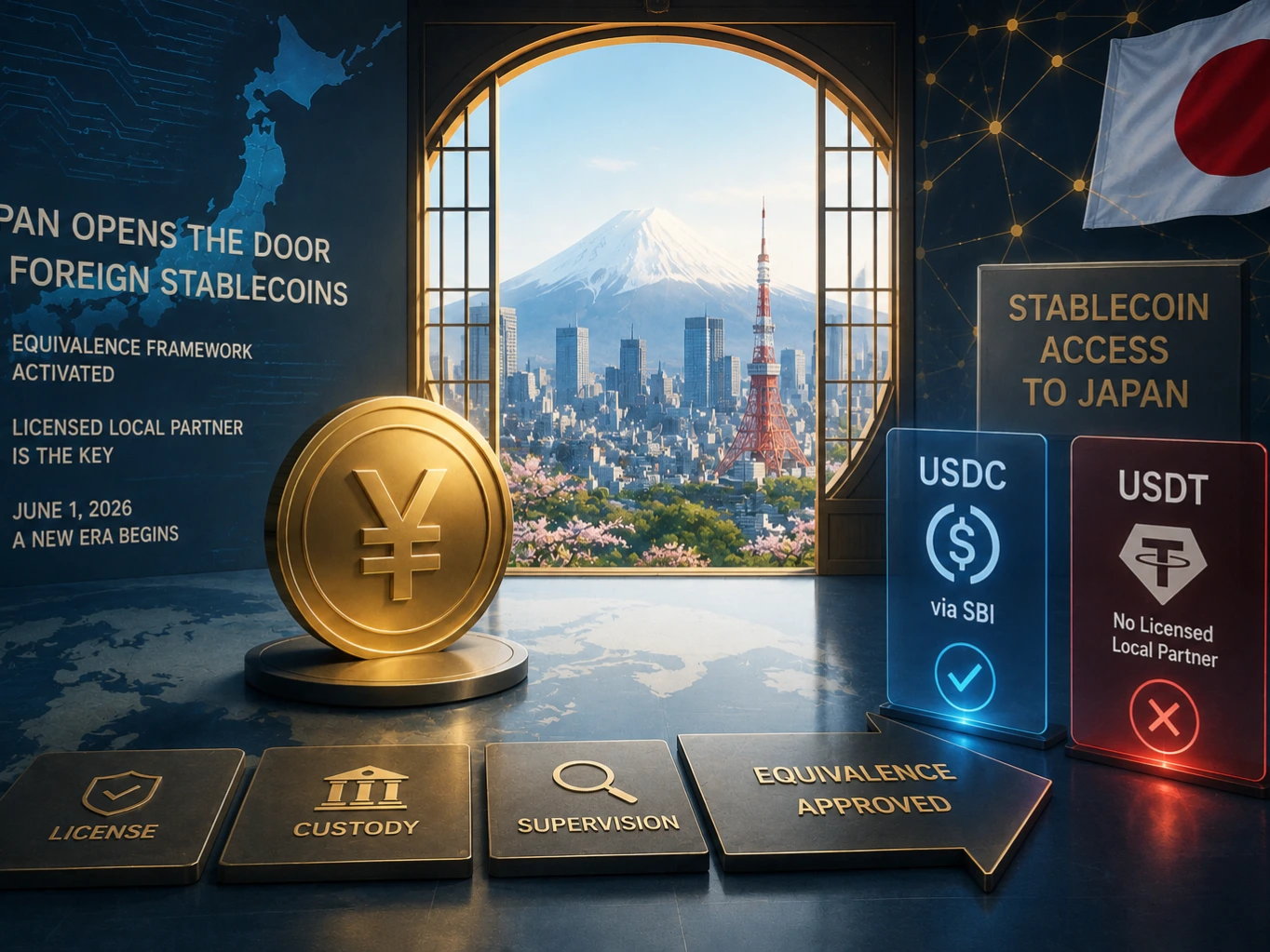
On June 1, 2026, Japan's Financial Services Agency activated a rule change that had been building since 2023: qualifying foreign-issued stablecoins can now legally operate as electronic payment instruments inside Japan, provided issuers meet equivalence tests on licensing, custody, and foreign supervision. For any fintech company that assumed Japan's notoriously cautious regulators would keep the door shut to foreign stablecoins indefinitely, this is the trend to stop ignoring — but the fine print matters more than the headline.
Why This Is Happening Now
Japan has been laying this groundwork longer than most governments have acknowledged stablecoins exist. After the 2014 Mt. Gox collapse forced early crypto-exchange regulation, Japan rewrote its Payment Services Act in 2023 specifically to make a Terra/Luna-style collapse structurally impossible on its soil — restricting who could issue "digital-money type stablecoins" to licensed banks, fund transfer providers, and trust companies. That cautious foundation is exactly why the June 2026 opening carries real weight: this isn't a country moving fast and loosely into crypto, it's one that spent three years building rails deliberately and is now activating them for foreign players on its own terms.
The scale being targeted is substantial. JPYC, which became Japan's first fully FSA-licensed yen stablecoin in October 2025, is targeting one trillion yen (about $6.8 billion) in issuance over three years. Separately, Japan's three megabanks — MUFG, SMBC, and Mizuho — are running Project Pax, targeting one trillion yen in B2B stablecoin volume by 2028. This isn't a niche crypto experiment; it's becoming core financial infrastructure with megabank backing, at a moment when Citigroup projects the global stablecoin market could reach $3.7 trillion by 2030.
The Part Most Foreign Fintechs Will Miss: Distribution Is the Real Gatekeeper
Here's where the trend gets genuinely instructive rather than just promising. The June 2026 rule doesn't treat every foreign stablecoin equally — it applies an equivalence test, and how individual issuers are navigating that test tells you exactly what actually matters on the ground in Japan.
Circle's USDC has the clearest path specifically because it built a local licensed distribution relationship — established through SBI VC Trade's registration as a licensed electronic payment instrument exchange service provider, paired with an explicit Circle–SBI partnership. Tether's USDT, by contrast, faces a materially higher bar under the FSA's equivalence standard, due in part to the absence of a licensed Japanese distribution partner. Same regulatory door, same global scale, two very different outcomes — and the deciding factor wasn't reserve size or brand recognition. It was whether the company had already built the local licensed relationship the regulatory framework was designed to reward.
Even after clearing that bar, adoption isn't automatic. Large Japanese enterprises still run on SWIFT and megabank relationships embedded across procurement, treasury, and accounting workflows for decades — meaning the real competitive fight for a foreign stablecoin issuer in Japan isn't winning regulatory approval, it's convincing entrenched enterprise finance teams to move at all. That's a distribution and relationship problem, not a compliance problem, and it's one no equivalence certificate solves on its own.
What This Means If You're a Foreign Fintech Watching From Outside
This pattern will look familiar to anyone who's followed this blog's earlier case studies on AI, e-commerce, and startup entry into Japan: regulatory access and market success are two different milestones, and the gap between them is almost always a local distribution relationship built before the regulatory door opens, not scrambled together after. Circle didn't wait for June 2026 to find its Japanese partner — the SBI relationship predated the rule change that rewarded it.
For a foreign fintech or stablecoin issuer evaluating Japan today, the takeaway isn't "wait and see how the equivalence framework shakes out." It's that the equivalence framework itself is now explicitly structured to favor companies that arrive with a real, licensed local relationship already in place — and the FSA has just made that advantage legally formal rather than merely helpful.
This is exactly the kind of ground-floor relationship Bybeit is built to help foreign companies establish before a regulatory window like this one fully matures — connecting overseas fintech and payments companies with the licensed local partners that Japan's own rules now treat as the deciding factor between market access and market exclusion. If your stablecoin or payments product is watching Japan's June 2026 opening from the outside, the honest lesson from Circle and Tether's diverging paths is that the best time to build that local relationship was before the rule changed — the second-best time is now, before the rest of the market catches up.